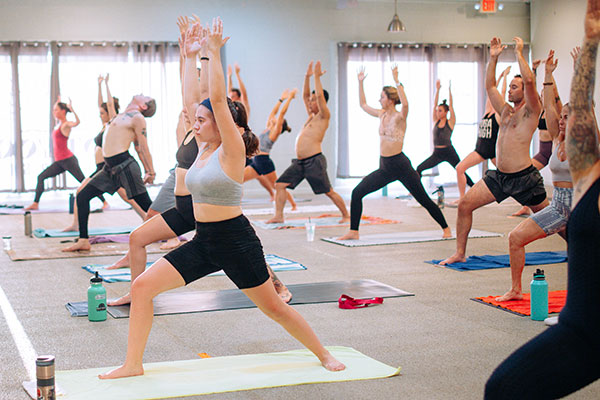

Heated vs. Non-Heated Yoga: Which Is Right for You?
Some people walk into a 108-degree room and feel right at home. Others would rather keep their yoga cool, calm and dry. Both are completely valid ways to practice. If you’re trying to decide between heated and non-heated yoga, here’s how they differ, what each one feels like, and how to figure out which is right for you (hint: you don’t have to pick just one).
What’s the Difference Between Heated and Non-Heated Yoga?
The poses can be surprisingly similar. The big difference is the room. Heated yoga takes place in a warmed studio, so you sweat more and the class feels more intense. Non-heated yoga (also called unheated yoga) happens at normal room temperature, the way yoga has been practiced for most of its history.
At Hot Yoga University we have three rooms under one roof: a hot room, an infrared room and a non-heated room. That makes it easy to try each one and see how your body responds.
What Heated Yoga Feels Like
We offer two kinds of heat, and they feel very different.
The hot room: about 108°. Our hot room runs at about 108 degrees with roughly 30% humidity. Expect to sweat, work hard and focus on your breath. Many students find the warmth helps their body feel more open and mobile, and they love the challenge. This is the room for Hot Yasa, Hot Hatha, Hot Sculpt, HotFiit, PyroPilates and Warm Yin.
The infrared room: 85 to 90°. Our infrared room uses ceiling-mounted panels that warm you directly instead of heating the air. You still feel warm and loose, without the intensity of the hot room. This is the room for Infrared Yin and Infrared Mat Pilates.
Curious how the temperatures compare in more detail? Our guide How Hot Is Hot Yoga? walks through all three rooms.
What Non-Heated Yoga Feels Like
Our non-heated room isn’t heated at all. It runs at normal room temperature, so you get a full yoga practice without the heat. Without the sweat, it’s often easier to notice the small details: your alignment, your breath and how each pose feels.
Our non-heated classes include:
- Non-Heated Vinyasa: 60 minutes of flowing movement that links breath to movement, building strength, flexibility and energy without the heat.
- Yin: 60 minutes of floor poses held two to five minutes or longer, with a focus on breath and stillness. Many classes include sound healing.
- Yin/Nidra: a 75-minute class that pairs Yin stretching with Yoga Nidra, a guided meditation done lying down.
- Yoga Nidra & Sound Healing: 25 minutes of Yoga Nidra followed by 20 minutes of crystal bowls, gongs, chimes and rain sticks.
- Sunday Soul Service: a 45-minute spiritual practice led by Lexy every other Sunday, with mudras, mantras, breathwork, yoga poses and guided meditation.
Is Non-Heated Yoga Still a Good Workout?
Yes. Heat changes how a class feels, but it isn’t what makes yoga work. A flowing Non-Heated Vinyasa class still builds strength, flexibility and balance, and the slower Yin and Nidra classes are great for mobility, recovery and calming your mind.
Heated classes add intensity, and some, like Hot Sculpt and HotFiit, mix in weights and cardio for a high-energy workout. Everyone’s experience is different, so the best class is the one you enjoy enough to keep coming back to.
Side by Side
| Hot Room | Infrared Room | Non-Heated Room | |
|---|---|---|---|
| Temperature | About 108° | 85 to 90° | Room temperature |
| How it feels | Intense, sweaty, challenging | Warm, comfortable, easier to settle into | Cool, calm and steady |
| Great for | Heat lovers who want a challenge | Easing into heat, recovery days | Beginners, heat-sensitive students, recovery days |
| Classes | Yasa, Hatha, Sculpt, HotFiit, PyroPilates, Warm Yin | Yin, Mat Pilates | Vinyasa, Yin, Yin/Nidra, Nidra & Sound Healing, Sunday Soul Service |
Which Is Better for Beginners?
Both. Every class at HYU is open to beginners, and our instructors offer modifications throughout. It really comes down to how you feel about heat.
- If you love to sweat, try Hot Hatha, a slower-paced hot class with longer holds and a focus on alignment.
- If you want warmth without the intensity, start in the infrared room with Infrared Yin or Infrared Mat Pilates.
- If you’d rather learn the movements first, or you just don’t enjoy the heat, start with a non-heated class.
Getting ready for your first class? Our guide Hot Yoga for Beginners covers what to bring and what to expect.
When Non-Heated Yoga Is the Better Choice
Some days, and some bodies, simply call for a cooler room. Non-heated yoga is a great pick if:
- You’re sensitive to heat, or you just don’t like it.
- You want a recovery day between harder heated classes.
- You’re looking for deep rest, like Yin, Yoga Nidra or sound healing.
- You have high or low blood pressure, are pregnant or nursing, or have a diagnosed health condition. Check with your doctor before taking a heated class. Our non-heated room has a full schedule too.
One more note: students must be at least 13 years old to take our heated classes.
Do You Have to Choose?
Nope. Every pass, pack and membership at HYU covers all of our classes: hot, infrared and non-heated. Lots of our students mix it up, with a sweaty Hot Yasa one day, an Infrared Mat Pilates class the next and a Yin/Nidra class when they need to slow down. Having all three rooms in one studio means you can match your practice to how you feel that day. See our pricing page for every option.
Still deciding between our two heated rooms? Our hot vs. infrared comparison lays them out side by side, and our yoga FAQs answer the rest.
Try Every Room for $25
The best way to find out whether you’re a heated or non-heated yogi is to try both. Our new student week gives you 7 days of unlimited classes for $25, available to Arizona residents new to HYU. Take a hot class, an infrared class and a non-heated class, and see which one you keep coming back to.
Claim your first week, then pick a class on the schedule. We’ll see you on the mat.